
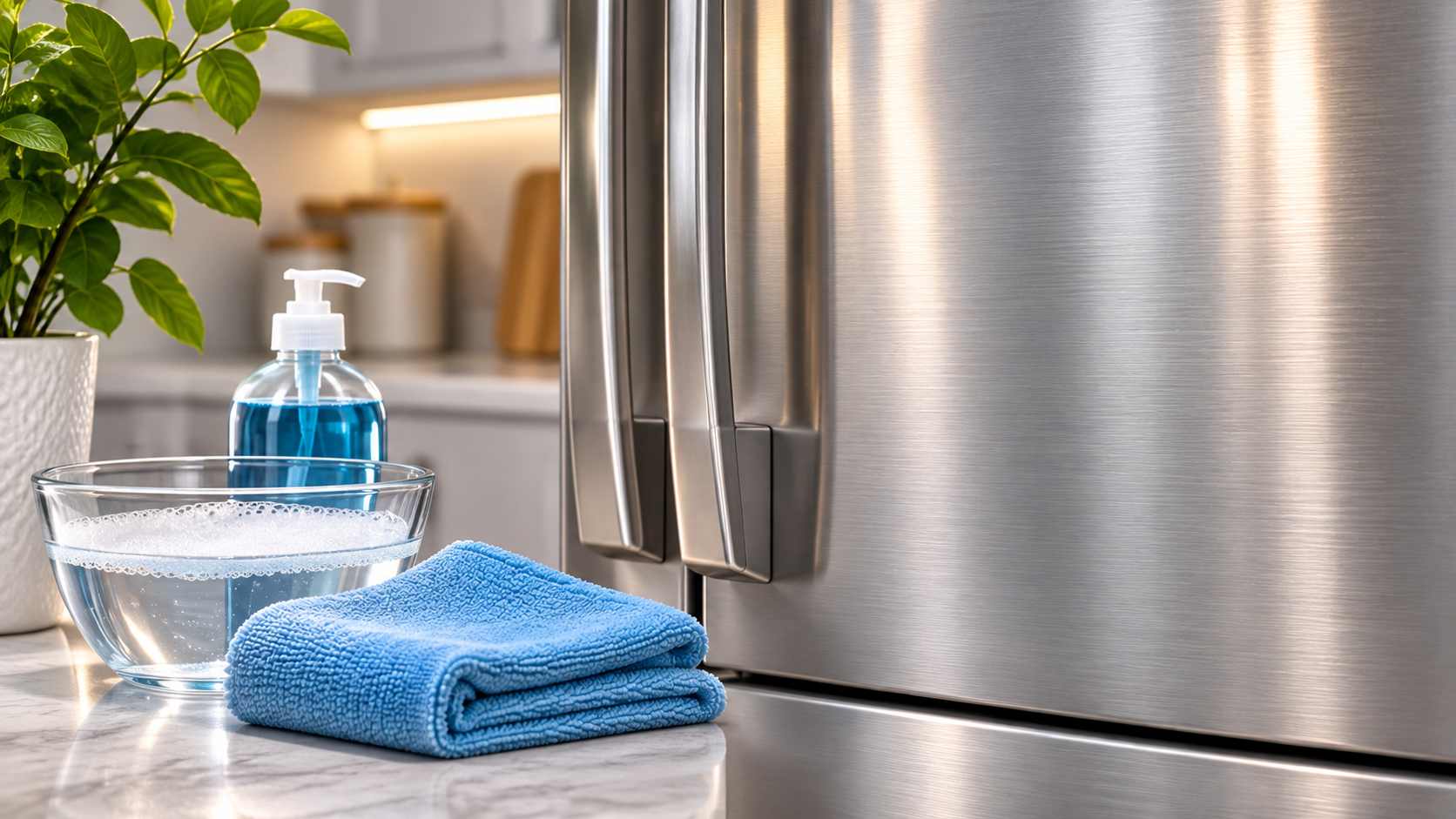
What annoys me most is when I finish wiping down the refrigerator, take two steps back, and see streaks all over the doors. I’ve just cleaned the whole thing, and somehow it looks like I need to do it again. After more than twenty years of taking care of a home, you’d think I could at least clean one metal surface without giving myself another chore!
If you’re wondering how to clean stainless steel appliances without leaving streaks, start by identifying the direction of the fine lines in the metal. Wipe along those lines with a microfiber cloth dampened with warm water and mild dish soap. Remove the soap with a second damp cloth, then dry everything immediately. That last step helps prevent the white mineral spots that appear when water evaporates on the surface.
I prefer methods that use supplies I already have at home. There are enough bottles under my kitchen sink, and I’m certainly not buying another one every time somebody leaves fingerprints on the refrigerator.
What You’ll Need Before You Start
For anyone learning how to clean stainless steel appliances, I’d recommend starting with a few basic supplies. A mild solution and clean microfiber cloths will handle most everyday fingerprints and grease.
Here’s what to get ready:
- Three clean microfiber cloths
- 1 quart of warm water
- 1 teaspoon of mild dish soap
- A small bowl
- Distilled water, if your tap water leaves mineral spots
The soap-to-water ratio comes from KitchenAid’s appliance care instructions, which also recommend soft cloths and wiping in the direction of the metal’s grain.
Before you begin, check the finish on your appliance. Some refrigerators and dishwashers have special fingerprint-resistant coatings that require extra care. Your owner’s manual should always come first when choosing a cleaner.
10 Tips on How to Clean Stainless Steel Appliances Without Streaks
1. Find the Grain Before You Touch the Surface
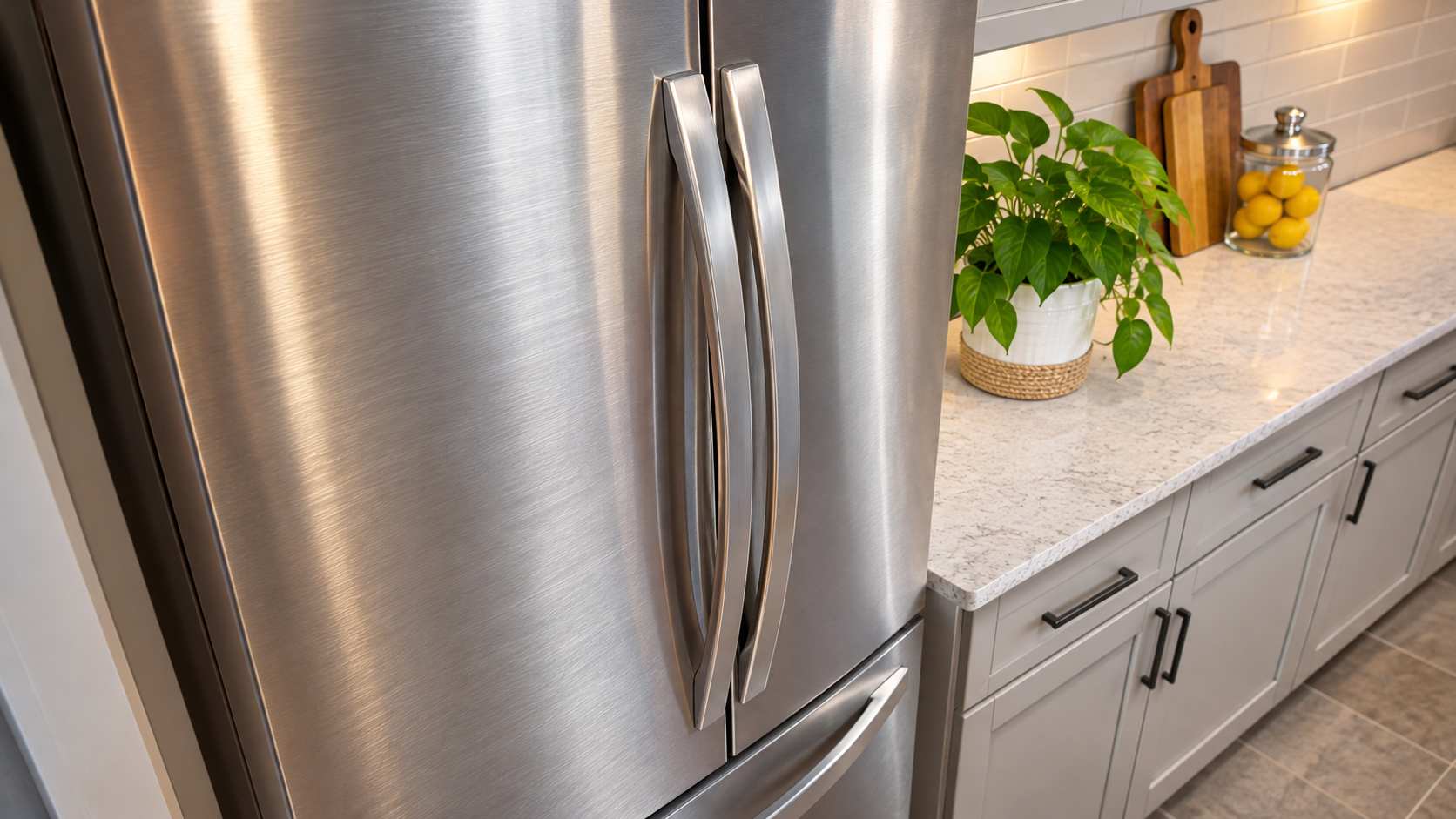
Stand close to your refrigerator or dishwasher and look at the metal under good light. Most brushed stainless steel surfaces have very fine parallel lines that run vertically or horizontally.
Those lines show the direction of the finish, commonly called the grain.
If the lines run vertically, wipe up and down. If they’re horizontal, move your cloth from side to side. Use gentle pressure and follow the same direction throughout the job.
Why does it matter? The tiny grooves created during manufacturing can hold grease and cleaner residue. Wiping across them may spread that residue unevenly and make streaks more noticeable.
I know it sounds like a small detail. Still, it’s one of the first things I’d check when figuring out how to clean stainless steel appliances that always seem to have marks after every wash.
On appliances with special coatings or finishes without visible grain, follow the manufacturer’s instructions.
2. Remove Dust Before You Add Soap
I would start with a clean microfiber cloth lightly dampened with water. Wipe away loose dust and any small particles before applying your soap solution. Pay attention to the top edge of the refrigerator and the narrow areas around the handles.
If you find dried food, hold the damp cloth against the spot briefly, provided the appliance’s care instructions allow it. Once the residue softens, gently wipe it away.
There’s very little reward in scrubbing a stain so hard that you leave a permanent scratch. I’ve spent enough years learning which household jobs deserve a little patience.
3. Use Warm Water and Dish Soap for Greasy Fingerprints
Mild dish soap works well because its surfactants help loosen oils so they can be lifted away with water.
Dip your microfiber cloth into the prepared solution and wring it out thoroughly. Wipe the greasy area along the grain, using light pressure. If an oily mark remains, repeat the pass with a clean section of the cloth.
For routine cleaning, keep the solution mild. Excess soap can leave residue, especially when it dries on a large metal surface.
With how to clean stainless steel appliances, I would rather make another gentle pass over a stubborn fingerprint than use an unnecessarily strong product.
4. Remove the Soap Before It Dries
Then the sunlight hits the refrigerator, and there are cloudy streaks across the door.
Soap residue may be responsible. Certain appliance polishes can also leave a film, especially after repeated applications.
The ServiceMaster explanation of streaky stainless steel identifies product residue as a common cause of marks that appear after cleaning.
Take a second microfiber cloth, dampen it with plain water, and wring it out. Wipe the cleaned area until the soap residue is gone.
Pay close attention to the lower edge of the appliance, where excess solution can collect. A quick check now can save you another full wipe-down later.
5. Dry the Surface Before Water Spots Form
Tap water contains dissolved minerals, including calcium and magnesium. When water evaporates, some of those minerals remain on the surface as pale spots or a cloudy film.
Take your third microfiber cloth and buff the metal until it’s completely dry. Follow the grain again, and check the edges where small droplets may remain.
If your tap water regularly leaves white marks, try a final wipe with a cloth dampened with distilled water. Then dry the area immediately.
Distilled water contains far fewer dissolved minerals than ordinary tap water, so it can help reduce spotting.
Whenever someone asks me how to clean stainless steel appliances without those annoying white marks, I pay particular attention to the final rinse and dry.
6. Start With the Refrigerator Handles
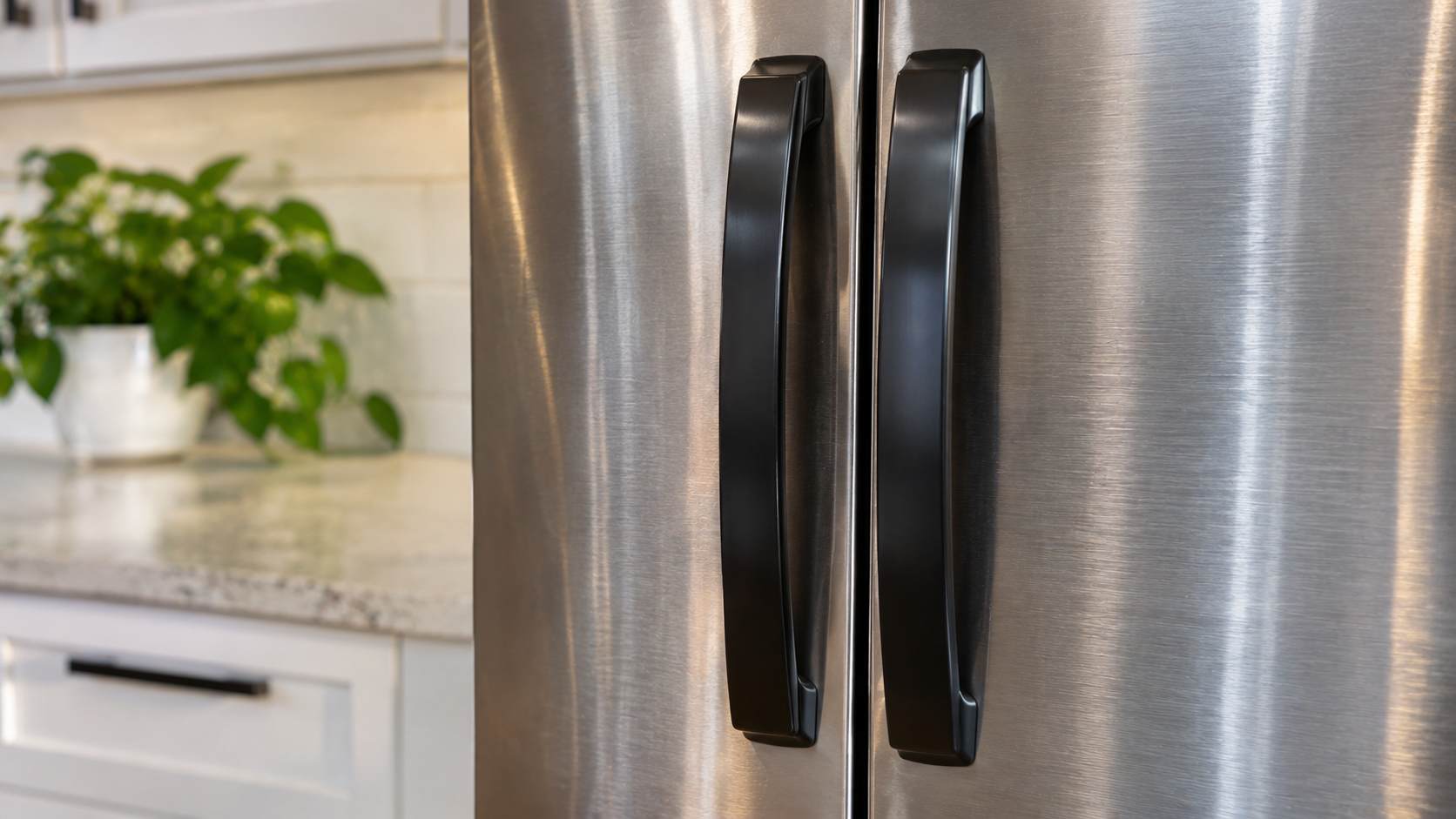
The refrigerator deserves a little special attention because everyone in the house touches it throughout the day.
I would start with the handles and the surrounding metal, where skin oils collect. Once those areas are clean, move across the larger panels in the direction of the grain.
If your refrigerator has a water or ice dispenser, look beneath the outlet. Small droplets can dry there and leave mineral deposits, especially in homes with hard water.
Use a well-wrung cloth around the dispenser and keep moisture away from electrical controls.
For how to clean stainless steel appliances such as refrigerators, I’d keep the routine based on actual use. Wipe fresh fingerprints when they become noticeable and save the full exterior for a more thorough clean when necessary.
One fingerprint beside the handle certainly doesn’t justify washing the entire door again. I have better things to do with my afternoon.
7. Pay Attention to the Dishwasher’s Lower Edge
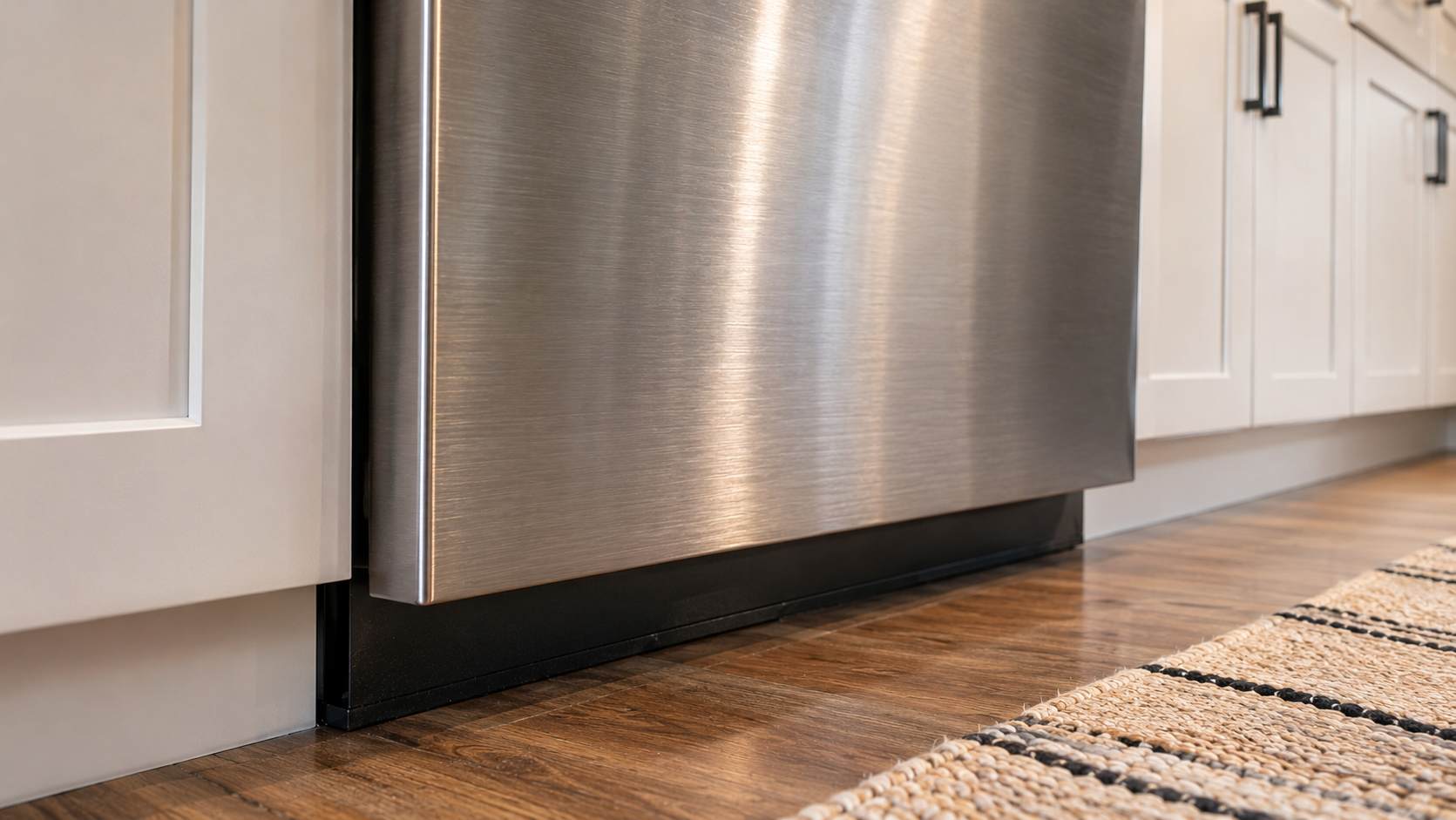
The dishwasher is another appliance that collects marks around the handle. When we load dirty plates, a little grease can transfer from our hands onto the metal.
Start around the handle, then work down the front panel. The lower edge is worth checking because small droplets can collect near the seams.
If the dishwasher has electronic controls on the front, apply the solution to your cloth instead of spraying directly onto the panel. Excess moisture around buttons and seams can create problems, so follow the care instructions for your model.
Once you’ve wiped the door, stand slightly to one side and look at it under the kitchen lights.
Some streaks are difficult to notice when you stand directly in front of a flat surface. A different angle can reveal any moisture or residue that still needs attention.
8. Remove Cooking Grease From the Range Hood First
If you often fry food, the buildup may become noticeable around the lower edges of the hood.
Before you begin, turn off the appliance and let the surface cool. Use a microfiber cloth dampened with warm, soapy water to remove the grease, following the grain where it is visible.
If a patch feels sticky, give the mild solution a little time to soften the buildup, as long as the manufacturer permits it. Avoid allowing liquid to enter vents or electrical components.
For thicker grease around the stove, our guide to kitchen spills and built-up grime covers the surrounding surfaces and suitable methods for everyday messes.
The range hood filter also needs separate care. Washable metal filters can usually be cleaned according to the appliance instructions. Some charcoal filters are designed for replacement, so check the type before putting anything in water.
When deciding how to clean stainless steel appliances near the stove, consider the amount of grease on the surface before choosing a product.
9. Check for Fingerprint-Resistant Coatings Before Using Stronger Cleaners
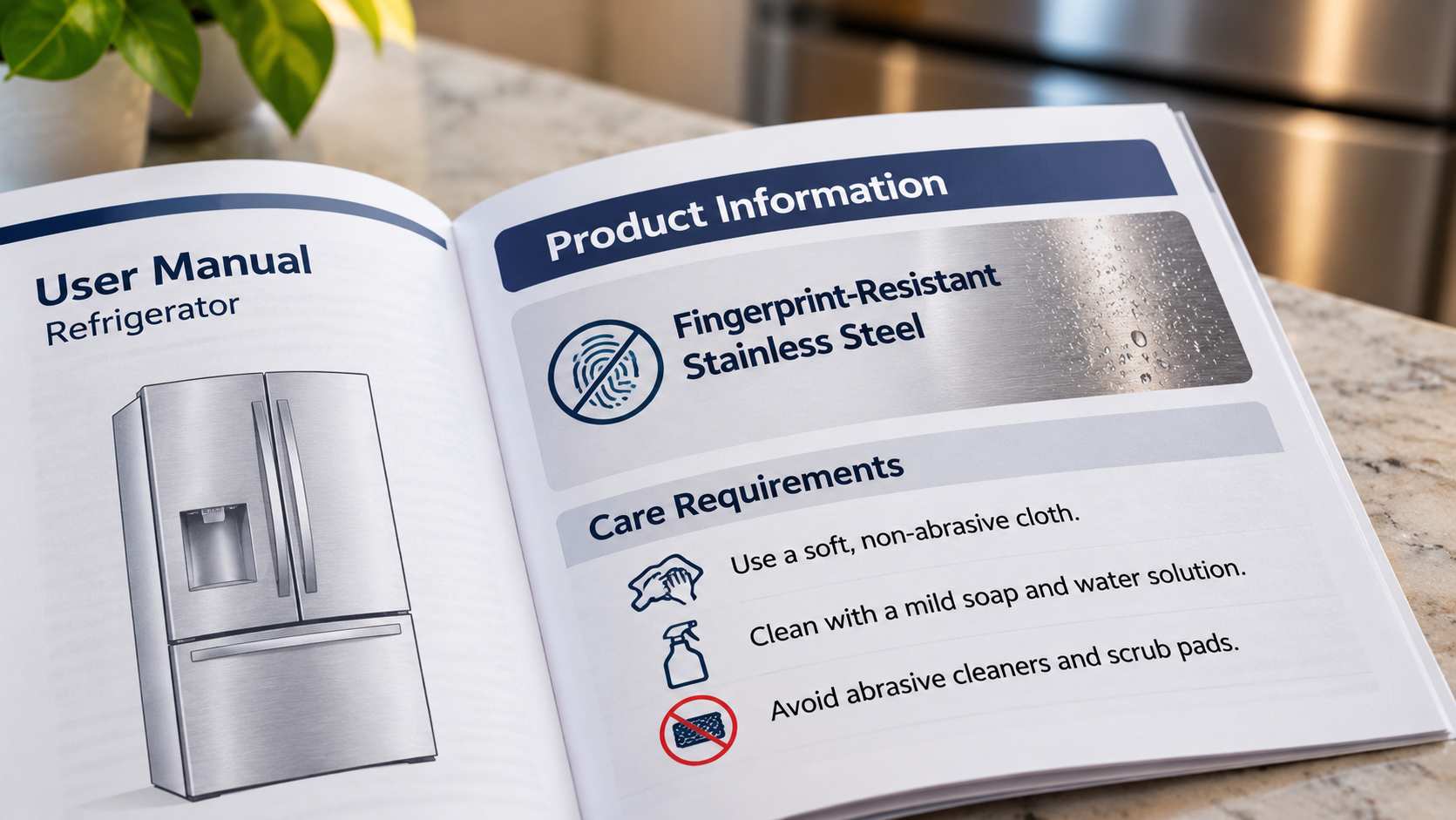
Some appliances have protective finishes designed to make fingerprints less noticeable. You may see descriptions such as fingerprint-resistant stainless steel or black stainless steel in the product information.
Those finishes can have different care requirements.
For example, Whirlpool’s instructions for coated surfaces recommend warm water with mild detergent and a soft cloth. They also warn against several products that could damage the protective layer.
Here’s what I’d keep away from stainless steel appliance finishes unless the manufacturer specifically approves the product:
- Steel wool and metal brushes
- Abrasive scouring powders
- Chlorine bleach
- Ammonia-based cleaners
- Oven cleaners
- Acidic cleaners, including vinegar on sensitive coatings
Steel wool can scratch the metal, and aggressive chemicals can damage certain finishes.
If you’re considering a commercial stainless steel polish, first confirm that it’s suitable for your exact appliance. Test an approved product on a small, inconspicuous area according to its directions.
The same care applies to other delicate kitchen surfaces. Our guide to removing burnt food from glass stovetops covers methods that help avoid scratches on ceramic glass.
One damaged appliance finish can be far more annoying than a few fingerprints.
10. Check What Kind of Marks Remain Before Cleaning Again
White spots around a water dispenser often suggest mineral residue. A cloudy film across a large area may come from leftover cleaner. Greasy marks concentrated near handles are more likely to involve skin oils.
A clean cloth matters here, too.
According to Weiman’s guide to stainless steel streaks, cloths can retain detergent residue or other contaminants and transfer them back onto the metal.
When researching how to clean stainless steel appliances, it’s worth knowing when to stop. Additional scrubbing may worsen an existing scratch, and a permanent mark may require professional assessment.
I Have Better Things to Do Than Clean the Same Refrigerator Twice
After more than twenty years of household chores, I’ve learned how easily a small job can take twice as long when I keep repeating a method that hasn’t worked.
Stainless steel is a good example. You wipe the refrigerator, notice another streak, and reach for the cloth again. Before long, an ordinary household task has taken far more time than you intended.
My approach to how to clean stainless steel appliances is to give the surface enough attention during the first pass, then check the result under good light.
And when you’re finished, take those same two steps back and look at the refrigerator door.
If it looks good, put the cloth away and enjoy the rest of your day. I can think of plenty of things I’d rather do than clean a refrigerator I’ve just cleaned.