
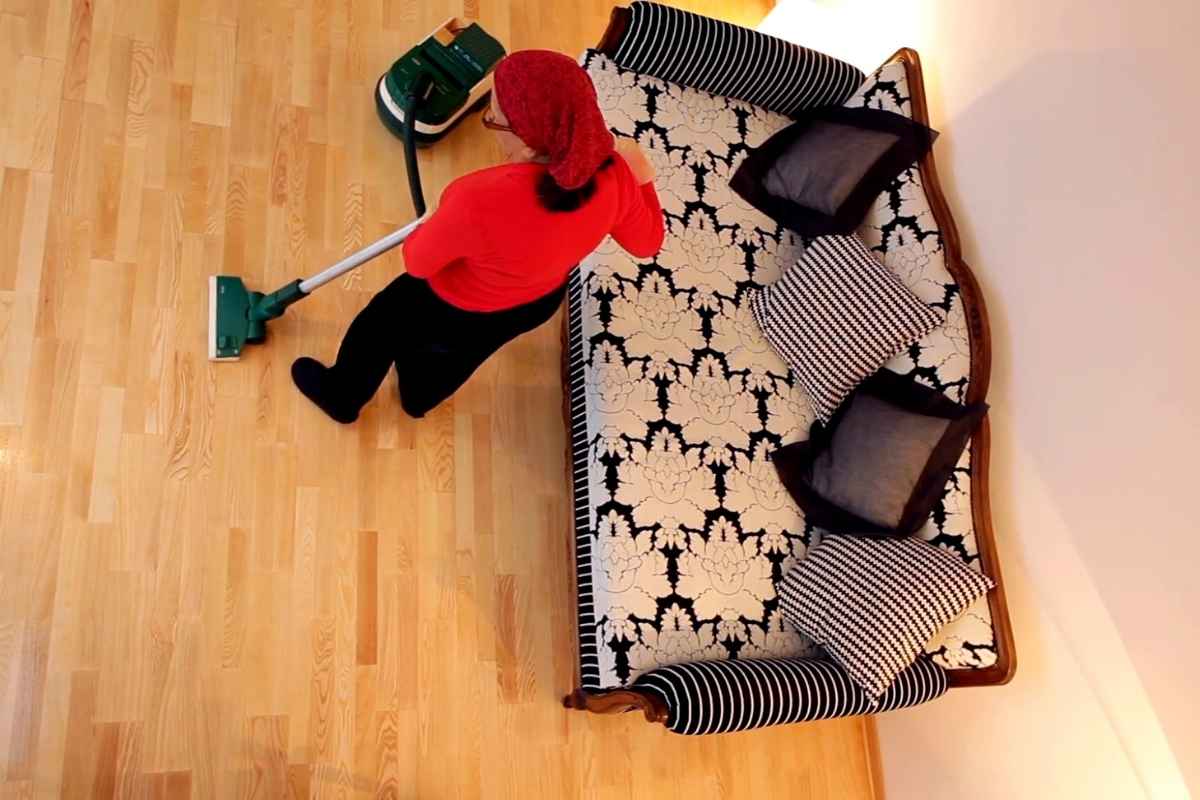
Keeping the house clean is much easier for me today than it was fifteen or twenty years ago, but I cannot credit some perfect schedule I finally discovered. My kids are simply older.
They no longer leave toys all over the living room, and I have not had to check what happened after suspicious silence in the next room for a very long time.
I still think about the years when they were little, especially when I talk to younger moms who feel like they spend the entire day doing things around the house, only to look around at night and still see toys on the floor, a full laundry basket, and several glasses that nobody else seems to notice.
So I decided to put together ten things I wish someone had told me when my kids were small. I do not expect every one of them to work for every family, but a few of them would definitely have saved me a lot of time.
1. Clean the Kitchen Right After the Main Meals
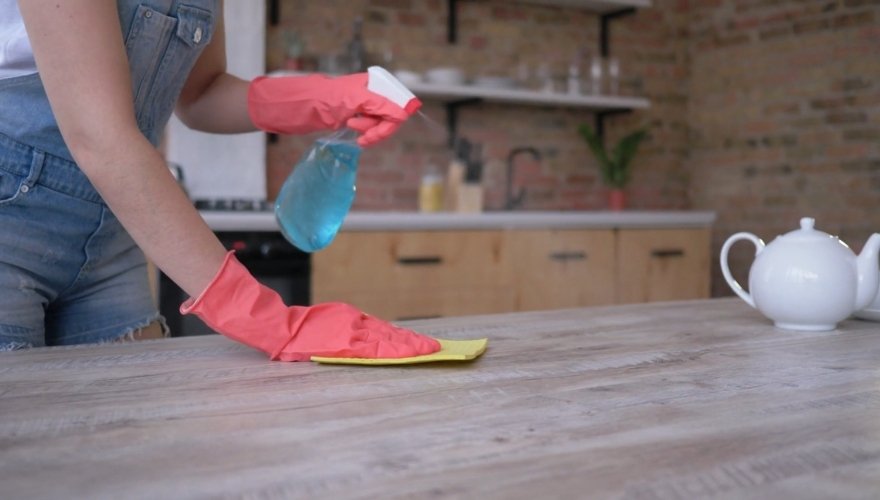
After breakfast, lunch, and dinner, put away the plates and glasses first. Then wipe the table and the counter where you prepared the food. Pick up crumbs under the table with a small brush and dustpan. You can finish the job in a minute instead of pulling out the full-size vacuum every time.
If you have a dishwasher, load it throughout the day. Run it after dinner and empty it in the morning while the kids eat breakfast.
2. Keep One Large Basket in the Living Room
Keep a large basket with handles in the living room and toss in anything that belongs in another room during the day. Children’s books, socks, crayons, small toys, and anything else that usually ends up on the sofa or table can go there.
Once a day, carry the basket through the house and put everything back with the kids. If they are old enough, have each child take their own things. The basket should be large enough for you to toss things in quickly without sorting or stacking them first.
3. Do Two Short Floor Resets During the Day
Pick two times for the floor, for example after lunch and before dinner. Set a timer for five minutes. Pick up toys from the main walkways, put shoes back by the door, move clothes where they belong, and vacuum only the spots where you can see crumbs.
When you focus only on the floor, the whole room looks better after a few minutes. Most of the lost time comes when you start wiping shelves, sorting toys, or opening drawers along the way.
4. Create One Clear Toy Zone
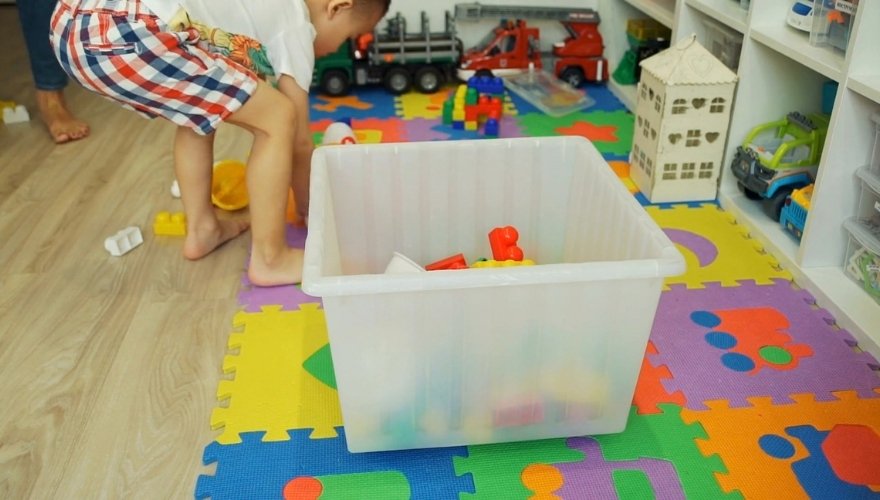
Choose one part of the living room where the kids can play and keep most of the toys there. A rug, a corner next to a shelf, or one part of the room with two large bins is enough.
One bin can hold blocks. Another can hold larger toys. Books can have their own shelf. Put small pieces in one smaller closed box.
When a child finishes with a toy, it goes back to the same part of the room. Evening cleanup then stays limited to one area instead of spreading across the whole house.
5. Rotate Toys Instead of Keeping Everything Available
Keep out the toys your kids use most often. Pack the rest into boxes and place them in a closet or on a higher shelf. After two or three weeks, swap part of the selection. Kids often become interested again in toys they have not seen for a while, and you have fewer things on the floor during the day.
If toy cleanup has started to take too long, pack away about one-third of the collection first. Even that amount can make the job noticeably faster.
6. Give Backpacks, Jackets, and Shoes a Permanent Place
Put low hooks for jackets in the hallway. Add one basket or shallow bin for shoes and a separate spot for backpacks. Keep everything low enough for a child to use without help.
Use the same order every time you come home: jacket on the hook, shoes in their place, backpack by the door.
The routine takes less than a minute, but it keeps the hallway from filling up with things you will have to put away later. If your kids often leave small items such as gloves or hats around, add one small basket just for them.
7. Give Each Child One Consistent Daily Job
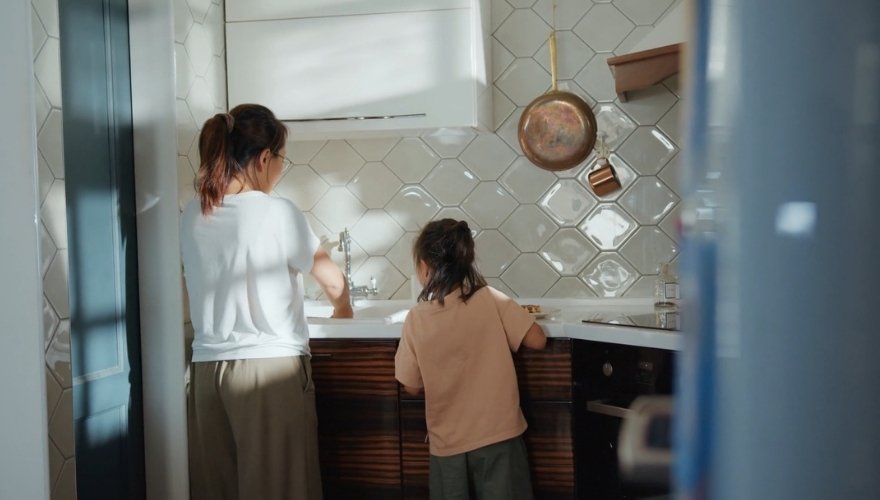
A small child can put toys back in a basket. A preschooler can straighten books, carry a plate to the kitchen, or put shoes away. A school-age child can wipe the table, collect personal items from the living room, or empty part of the dishwasher. I was reminded of those little jobs recently when I came across a Good Housekeeping article about chores for different ages.
The examples were remarkably close to what eventually worked in our house: little kids can put toys away and clear their plates, then take on more responsibility as they get older.
Keep the same job for several days or for the whole week. When a child knows exactly what belongs to them, you will need fewer reminders. One job is enough at first. Add another after the first one becomes routine.
8. Have a Ten-Minute Family Reset in the Evening
Choose the same time each day, such as before dinner or before baths, and set a timer for ten minutes. Give everyone one part of the house.
One child puts away toys. Another straightens books and personal items. An adult finishes the kitchen or wipes the table. If three people work for ten minutes, you can get much more done than one person who picks up after everyone throughout the day.
A clear time limit also helps children because they know exactly how long the job will last.
9. Spread Bigger Jobs Across the Week
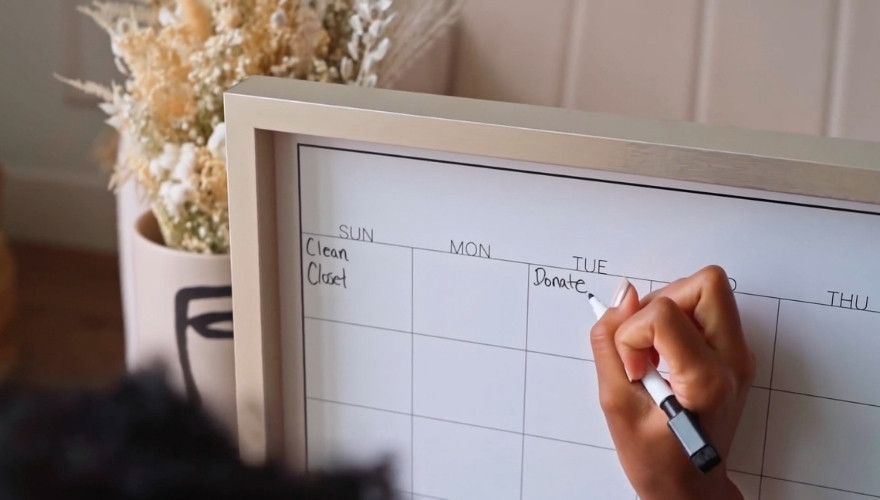
Give each day one main job that takes about 15 to 20 minutes.
Monday: clean the sink, mirror, toilet, and shower or tub.
You don’t need a weekly cleaning schedule to keep your home clean.
Tuesday: wipe dust from the surfaces you use most.
Wednesday: vacuum the kitchen, living room, and hallway.
Thursday: give the stove, appliance fronts, and counters a more thorough clean.
Friday: mop the floors or finish any job left over from the week.
Years later, I came across an American Cleaning Institute guide for getting kids involved in chores, and its list made me smile a little.
Clearing plates, putting toys away, setting the table, picking up clutter and helping with laundry were all there. Apparently, our household system was less original than I had thought.
A schedule like that protects the weekend from hours of housework and keeps bigger jobs from piling up all at once.
10. End the Day With a Short Setup for Morning
Before bed, run the dishwasher, wipe the kitchen table, and clear the main walkways. Then check backpacks, prepare what the kids need for school, and leave shoes by the door. If you have a younger child, lay out clothes for the next day too.
The whole routine takes about ten minutes once everything has its own place. Morning then starts with a clear table, a tidier floor, and everything ready to leave the house.
If I Had Small Kids Again Today, I Would Clean Less Often
My kids are older now, and I no longer live in the stage when toys can take over half the living room before lunch. When I think back on those years, the fact that the house did not always look the way I wanted bothers me the least.
So if I were talking to a younger mom who was looking at a mess around her right now, I would first tell her not to worry so much about all of it. Then I would tell her to choose the things that actually make it harder to get through the day and deal with those first.
I never found a way to make small children stop creating messes, and I doubt anyone else has either. I only found a much better way to avoid spending the entire day cleaning up after them.