
The microwave! What an invention. Want popcorn for movie night? It’s right there. Need to reheat that pizza you bought last night on your way home after a few too many drinks but never got around to eating? The microwave saves the day again. Mine gets so much use that sometimes several days go by before I actually look at the ceiling and back wall inside it.
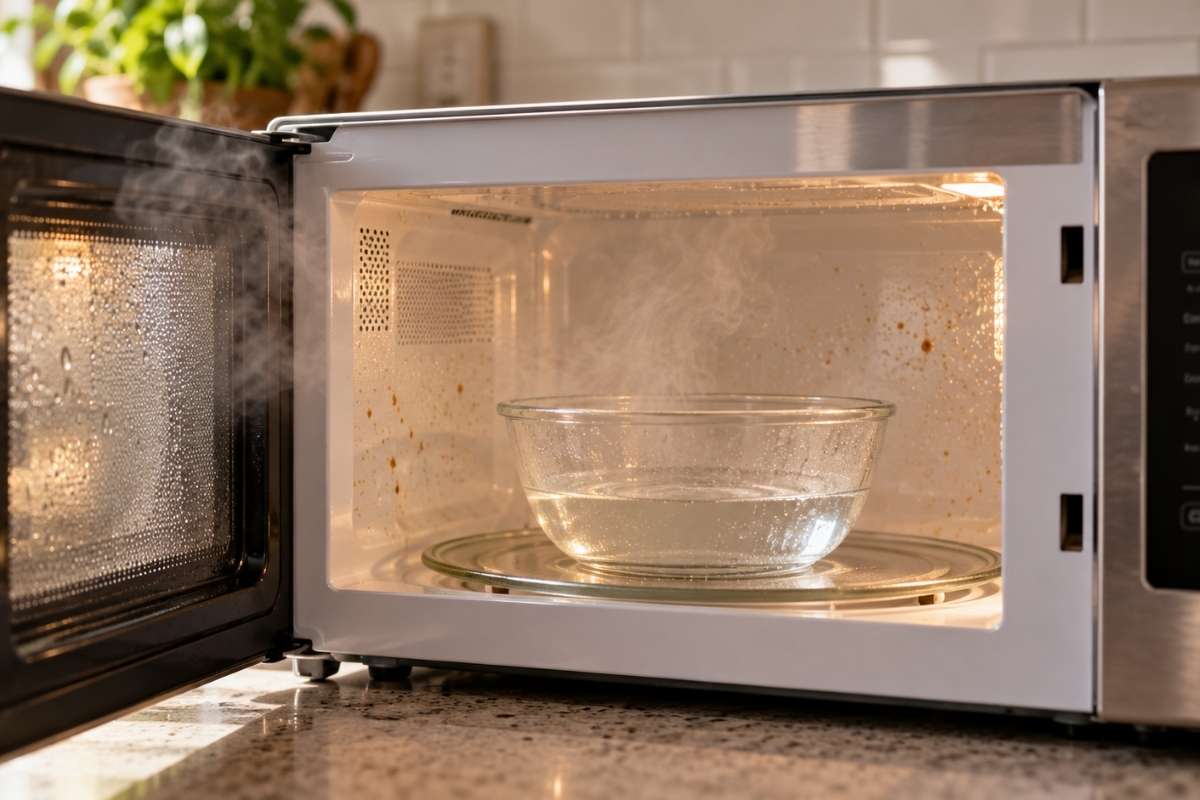
If you want to know how to clean a microwave without spending ages scrubbing, what works best for me is a bowl with 1 cup of white vinegar and 1 cup of water. I put it in the microwave for about five minutes, then leave the door closed for a few more minutes so the steam can soften the dried-on food. After that, I wipe everything down with the soft side of a sponge.
Whenever someone asks me how to clean microwave with vinegar, that’s the first method I recommend.
And cleaning a microwave can be a real pain in the a… well, you know what I mean. That’s why I decided to write this article for the homemakers who read my blog, but also for working women who, after a full day at work, certainly don’t feel like spending half an hour scraping dried tomato sauce off the microwave walls.
How I Clean My Microwave With Vinegar
I wet a sponge, scrub one dried-on stain, rinse it, and move on to the next. Later, I read Home Depot’s guide to microwave cleaning and found the ratio I use today whenever the interior needs a more thorough clean: 1 cup of white vinegar and 1 cup of water in a microwave-safe bowl. The bowl goes in for about five minutes, or until the liquid boils and the interior fills with steam.
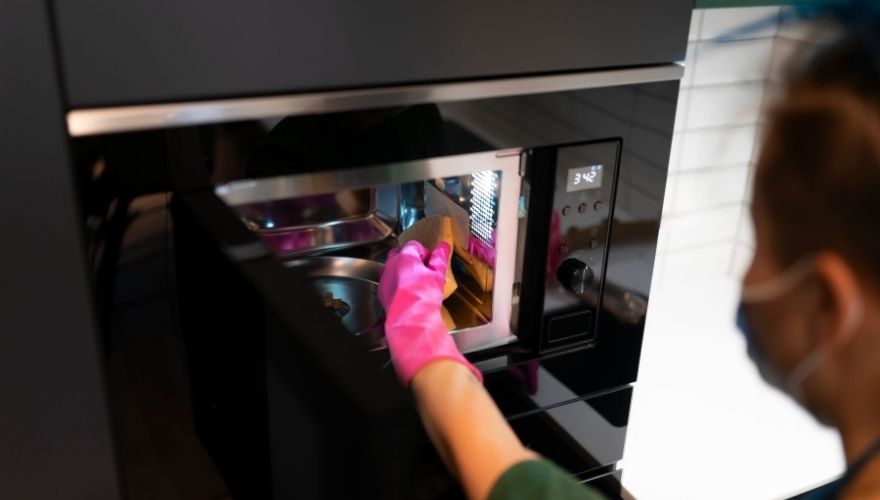
The bowl will be hot, so I take it out with an oven mitt. After that, I wipe the ceiling first, then the side walls, and finally the bottom. I leave the door for last because, in my microwave, it usually has the least stubborn residue. For me, that’s the easiest answer to how to clean a microwave when the inside looks much worse than the actual job turns out to be.
Let the Steam Do Its Part
Steam helps me most with food that has already dried onto the surfaces. If I open the door immediately, the surfaces are damp, but older stains can still be pretty stubborn. When I leave the door closed for a few more minutes, I notice the difference as soon as I start with the sponge.
That’s exactly why it’s recommended to leave the microwave door closed for several minutes after heating. If one stain remains, I wet the soft side of a sponge with the warm mixture in the bowl, hold it against the spot briefly, and wipe it again. I don’t use steel wool or the rough side of a sponge inside the microwave.
If you’ve read my article about cleaning up kitchen spills and tackling stubborn grease, you know I’d much rather soften a mess first than spend ten minutes trying to scrub it away. I follow the same rule whenever I explain how to clean a microwave.
I Wash the Glass Turntable and Support Ring Separately
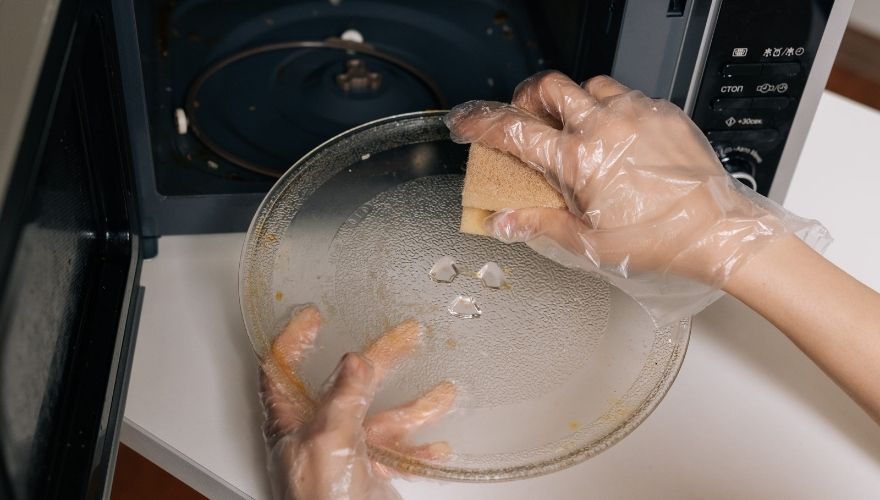
I remove the turntable only after I’m done with the steam and it has cooled enough for me to handle it comfortably. I do the same with the support ring underneath. I used to try to wipe everything down with the turntable still inside, but crumbs always seemed to remain under the edge or around those little wheels.
Home Depot also recommends washing the turntable and support ring separately. Once I remove them, I have full access to the bottom of the microwave. I wash the parts in the sink, wipe down the interior, and put everything back only after it’s dry.
If you’re looking up how to clean a microwave for the first time, check your model’s manual before putting the glass turntable in the dishwasher. I usually wash mine by hand because it only takes a minute or two.
There’s Another Trick! How I Clean My Microwave With Lemon
Vinegar works well for me when there’s a lot of dried-on food, but I don’t always like its smell. That’s when I use lemon.
For anyone who searches for how to clean microwave with lemon, all you need is half a cup of water and one lemon. I cut the lemon in half, squeeze the juice into a bowl, and drop both halves inside. I heat the bowl for about two minutes, or until the water boils and produces enough steam. After that, I leave the door closed for another few minutes.
A few days ago, I took another look at Whirlpool’s microwave cleaning guide. Their version uses 1 cup of water with 1 tablespoon of lemon juice or vinegar, with a heating time of two to five minutes. The measurements vary between guides, so I don’t combine several recipes. I choose one and stick with it.
When someone asks me if how to clean microwave with lemon works as well as vinegar, I tell them that it works just fine for everyday stains in my microwave. Steam does most of the work. I choose lemon when I prefer its smell.
Steam Softens the Mess, and I Wipe It Away
I’ve seen plenty of tricks online that make it look as if all you have to do is heat a bowl, open the door, and find the inside almost perfectly clean. That has never happened in my kitchen.
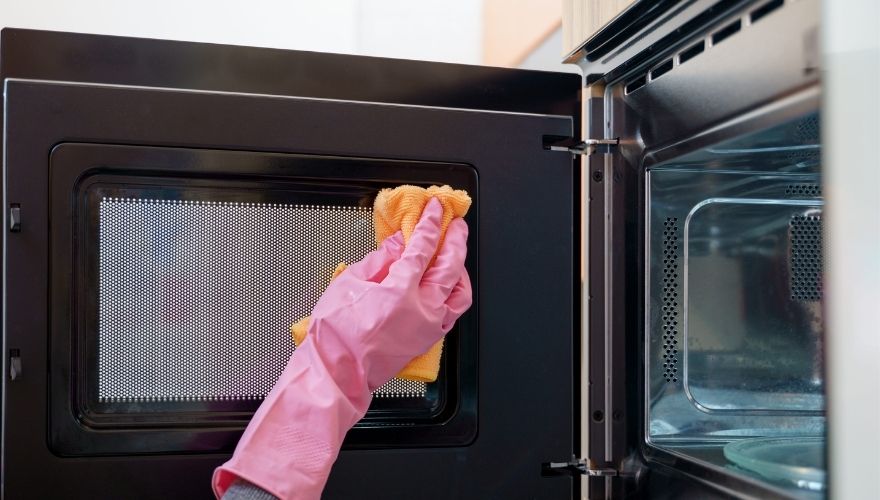
Whenever I explain how to clean a microwave, I always include the final wipe-down. Steam softens dried-on food and grease, and then I remove the residue with a damp cloth or the soft side of a sponge.
As I read an ABC article about microwave cleaning published in 2026, I came across advice from microbiologist Rozita Vaskoska of Australia’s CSIRO. She recommends cleaning spills and stains as soon as they happen and wiping down the interior every few days or once a week.
I Use Lemon for Lighter Messes and Odors
If the inside looks fairly clean and there are only a few small stains, how to clean microwave with lemon is often the method I prefer. Half a cup of water and one lemon require very little preparation, and after two minutes of heat, I let the steam sit inside for a few more minutes.
I especially like it after fish or food that leaves a lingering smell. In those situations, how to clean microwave with lemon works better for me than vinegar because my kitchen smells nicer afterward.
Still, I don’t use lemon as an excuse to skip the wipe-down. After the steam, I grab a cloth and wipe the entire interior, just as I do with vinegar.
Here Are a Few More Questions I Can Answer
Why Does My Microwave Still Smell Bad After I Clean It?
Odors often remain in the vents or on surfaces the steam didn’t reach properly. When that happens, I wipe down the interior once more, wash the glass turntable, and leave the door open for a while to let the microwave air out.
Why Does the Smell of Burnt Popcorn Last So Long in a Microwave?
Smoke and grease from burnt popcorn can leave residue on the interior surfaces and in the vents. After cleaning with vinegar or lemon, I leave the door open. If the smell remains, I repeat the process the next day.
Can Steam Damage My Microwave if I Use It Too Often for Cleaning?
Steam also forms during normal microwave use. Still, I don’t make steam cleaning part of my daily routine. I use it when dried-on food starts to build up, and between those deeper cleanings, I simply wipe away fresh spills.
What Do Yellow or Brown Stains Mean if I Can’t Remove Them?
Sometimes they’re no longer food stains but discoloration of the interior surface after prolonged use or overheating. If a stain doesn’t change after steam and a gentle wipe, I don’t try to remove it with an abrasive sponge.
What Should I Do if My Microwave Starts Sparking After Cleaning?
I stop it immediately and check for a metal object, a piece of foil, or a damaged component inside. If I can’t see anything that could explain the sparks, I stop using the microwave until a technician checks it. Sparking isn’t something I’d test by turning the microwave on again.
Can I Use Apple Cider Vinegar Instead of White Vinegar?
Yes, but I prefer white vinegar because it has less color and is less likely to leave a visible residue. For my usual method, I stick with white vinegar and water.
Vinegar or Lemon? Both Have Their Place in My Kitchen
When someone asks me how to clean a microwave, I don’t have just one answer. I reach for vinegar when there’s a lot of dried-on food inside. Lemon works for lighter messes and days when I don’t want the smell of warm vinegar in my kitchen.
For years, I made this chore harder than it needed to be. Today, how to clean a microwave usually comes down to a few minutes of steam and a quick wipe.