
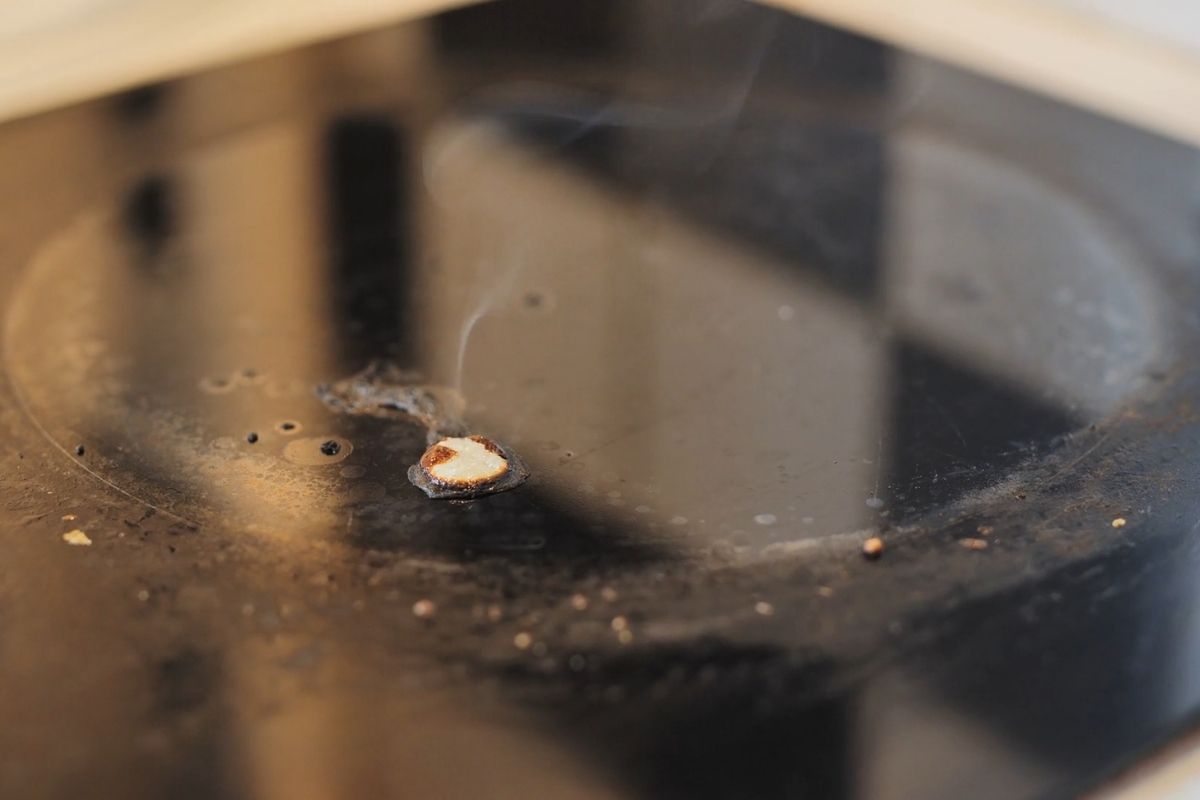
A glass stovetop is a flat ceramic-glass surface that covers electric heating elements or induction zones. There are no grates, burners, or traditional electric coils to remove before cleaning. The flat surface looks easier to maintain, but every dried drop and burnt piece of food shows right away.
If you need to remove burnt-on food from a glass stovetop without scratching it, first remove loose crumbs, soften the buildup, use a nonabrasive cleaner, and use a cooktop scraper at a low angle if needed.
With my own Glass Cooktop, I stick to four simple rules. I picked these because they solve almost every burnt stain for me without aggressive scrubbing.
Let’s quickly go through each one!
- Remove the stain without rough scrubbing
- Use moisture to loosen the buildup
- Reach for a scraper for hard residue
- Choose products made for glass stovetops
1. Soften Burnt-On Food With a Warm, Damp Cloth
For freshly burnt food, I first try the simplest method.
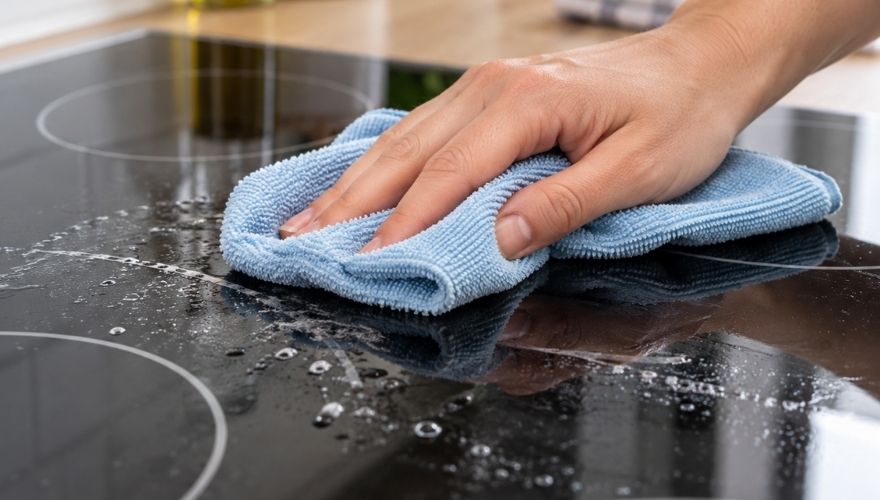
I wait until the Glass Cooktop is cool enough to touch safely, then remove all loose crumbs with a soft cloth. I place a warm, well-wrung cloth over the burnt area and leave it there for a few minutes.
The heat and moisture help separate the dried layer of food from the glass. After that, I wipe the stain with the soft side of a sponge or a microfiber cloth, and for grease I may also add a few drops of dish soap.
I do not press hard. If part of the stain comes off and part remains, I repeat the process one more time. I would much rather lose an extra five minutes than make a scratch that stays there for years.
I like this method most for milk, sauce, grease, and food residue that has dried onto the surface but has not yet formed a thick black layer.
2. Make a Baking Soda Paste for More Stubborn Marks
When water and dish soap are not enough, I use baking soda with a very small amount of water.
I make a soft paste, spread it over the burnt area, and leave it for a few minutes. I do not make a thick, dry mixture that I would use to scrub the glass. I need a damp paste that can soften the food residue.
After a few minutes, I take a damp microfiber cloth and gently wipe over the stain.
For a helpful visual guide, Faith’s Homemaking shares practical tips in her video on cleaning a glass stovetop with baking soda. Her advice is worth checking out if you want to try this method yourself.
3. Lift Hard Buildup With a Cooktop Scraper
With completely burnt-on food, there is often little point in scrubbing for a long time with a sponge. That is when I use a scraper made for glass stovetops.
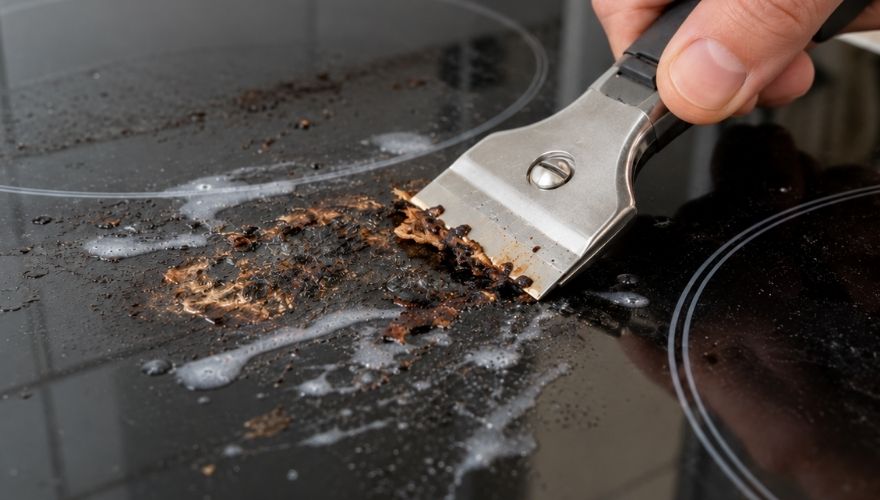
First, I put a little glass cooktop cleaner over the buildup and wait for it to soften the top layer. Then I hold the scraper at a low angle and gently push it under the edge of the burnt food.
I use longer, gentle strokes in one direction. When a piece lifts, I remove it with a cloth before making another pass.
4. Use a Cleaner Made Specifically for a Glass Cooktop
For dark rings around the heating zone, I most often reach for a product made for glass and ceramic cooktops.
I put a small amount directly on the cool Glass Cooktop surface, spread it with a soft cloth, and leave it for as long as the package instructions say. Then I go over the burnt area with circular motions without applying hard pressure.
For thicker buildup, I can combine this method with a scraper.
Next, I go over the entire surface once more with a clean, damp sponge to remove any remaining stains and loosened residue.
At the end, I use a fresh microfiber cloth to remove the remaining product and polish the surface. Some manufacturers, such as Whirlpool and Maytag, recommend products made for glass or ceramic cooktop surfaces and recognize only that method as the correct one.
What If We Scratch the Glass Cooktop Anyway?
If your glass cooktop gets a few small scratches, do not immediately make a big problem out of it. The stove is supposed to serve us, not the other way around. I have scratched my own glass cooktop in a few places over the years, and it still works completely normally. I usually notice those small lines only when the light hits them at a certain angle.
If those marks really bother you, first clean the surface well and check if it is actually a scratch, because dried buildup and cleaner residue can easily look similar. Very fine surface lines can sometimes become less noticeable after thorough cleaning and polishing with a product the manufacturer recommends for a glass cooktop.
Do not try to sand or repair a deep scratch with household tricks. If you can feel it with your fingernail, if it is spreading, or if you notice a crack, check the manufacturer’s instructions and contact a service technician.