
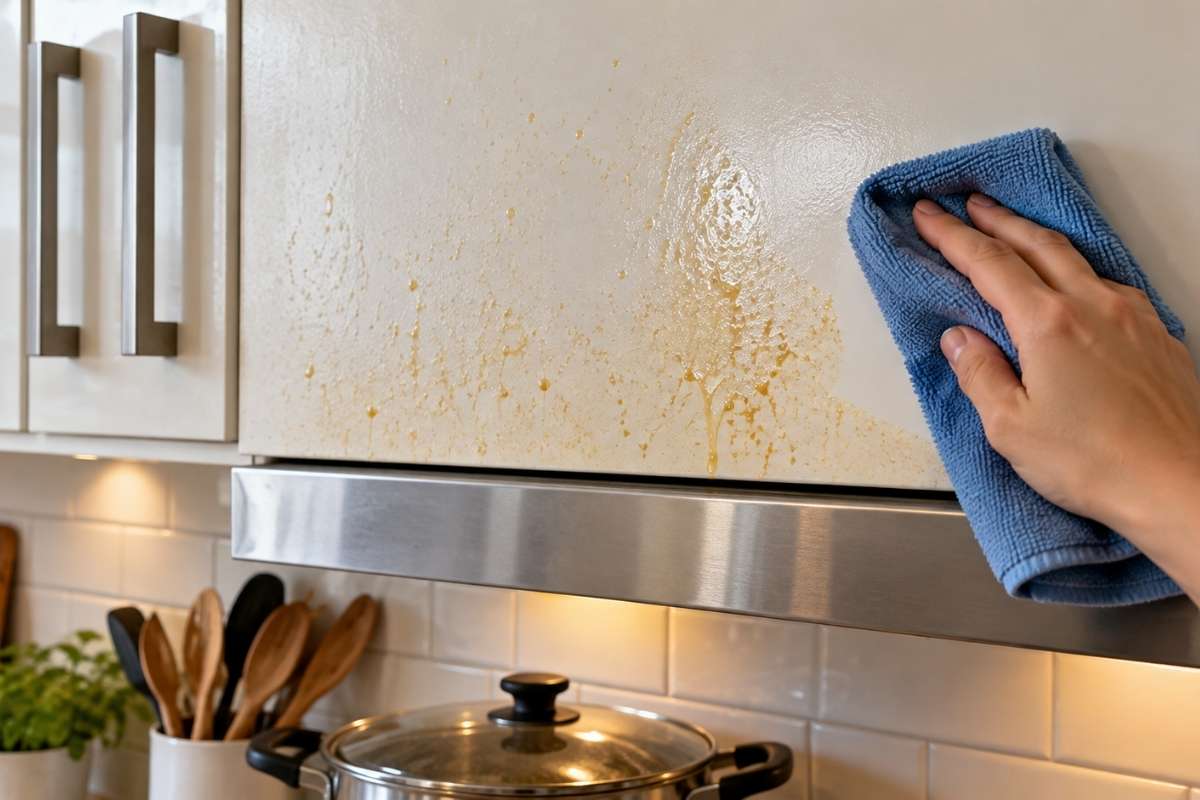
For a long time, I made one stupid mistake with my kitchen cabinets. I would wipe down what I could see, close the cabinet doors, and move on. I usually left the area next to the stove for some more serious cleaning day.
One day, I ran my hand along the side of the cabinet next to the stove, and my fingers literally stuck to the surface. That was when I decided to learn once and for all how to actually remove that sticky film without damaging the cabinets.
That evening, I had a choice between another episode of a TV show and reading about grease on kitchen cabinets. I chose the cabinets. I am still not sure if I should be proud of that decision.
To make a long story short, the easiest way I remove sticky film from kitchen cabinets is with warm water, a small amount of dish soap, and a well-wrung microfiber cloth. For older buildup, I move on to a stronger method only after testing it on a hidden part of the surface.
Here is what I found and how I do it now. You will still have plenty of time left for an episode afterward.
Sticky Film Near the Stove Usually Is Not Just Grease
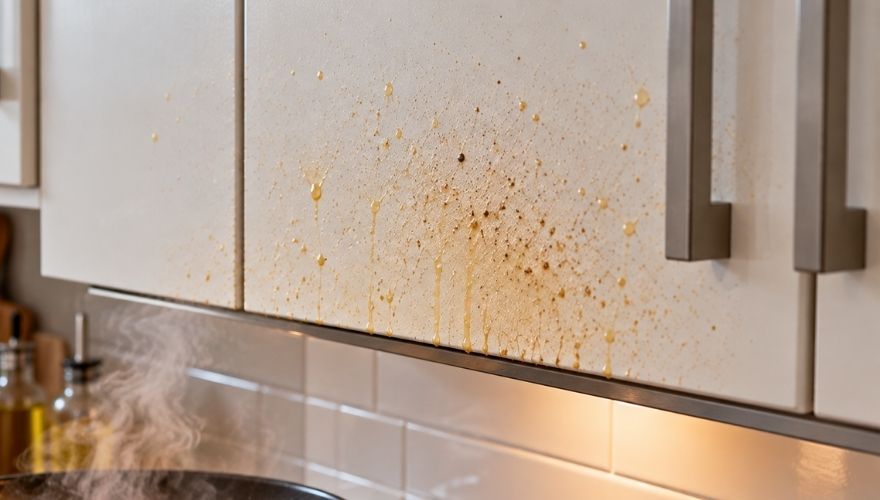
For a long time, I thought that sticky layer was simply dried oil. However, the issue is a little more complicated.
During cooking, tiny droplets of grease end up in the air, and some of them land on the cabinets around the stove. Dust then sticks to that greasy surface. The worst part is that new layers are added after every cooking session.
So the only logical step is to start with something that cuts through grease.
1. I Start With Warm Water and Dish Soap
I pour warm water into a bowl and add a few drops of dish soap. I dip the cloth into the water. Then I wring it out very well.
I wipe a small area and leave the soapy water on the greasy layer for a short time. After a few passes, the sticky film usually starts to loosen, and then I take another clean, damp cloth. I use it to remove the remaining dish soap.
Southern Living also recommends warm water and a few drops of dish soap as the first method for lighter grease buildup.
If this method removes the sticky layer, I stop there.
2. I Treat More Stubborn Buildup One Area at a Time
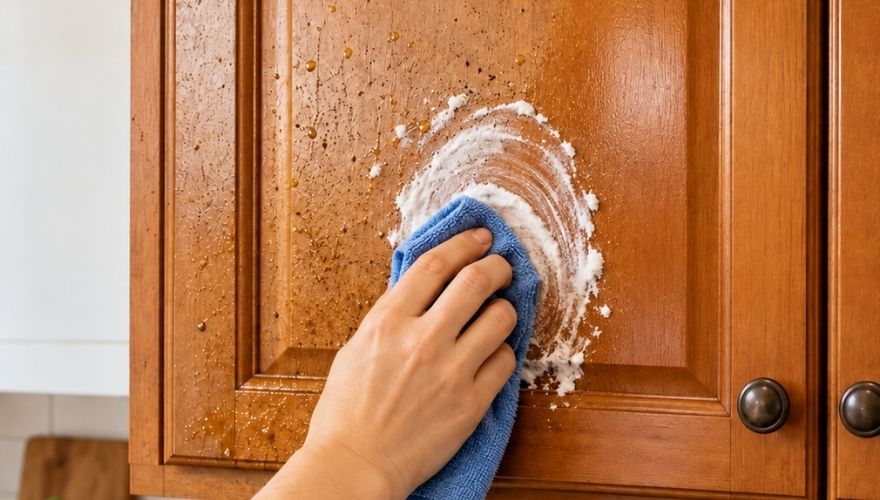
Sometimes dish soap removes most of the grease but leaves a few spots that are still sticky.
First, I check the cabinet finish, then I test the product on an area that is not easy to see. For a small stubborn spot, I can make a soft paste with baking soda and water.
I put a very small amount on the stain and leave it there briefly, then gently wipe the surface with a soft cloth.
Baking soda can be too abrasive for some finishes. I do not use this method on glossy, lacquered, or unknown surfaces without testing it first.
Chantel Mila filmed a simple video showing how she removes stains using baking soda and lemon, and I’m sharing it here for you to watch.
3. With Old Grease, I Give the Cleaner a Little Time
Another old mistake of mine was rushing. I would apply the cleaner, start scrubbing right away, and then get annoyed because nothing was coming off.
With a thick layer of sticky film, I do things differently now. I apply a small amount of a cleaner that is safe for the material of my cabinets and let it sit for a few moments according to the product instructions because the grease then starts to release more easily. With a commercial degreaser, I always check the label. Not every product is made for wood, painted doors, laminate, or lacquered surfaces.
4. At the End, I Remove the Cleaner Residue Too
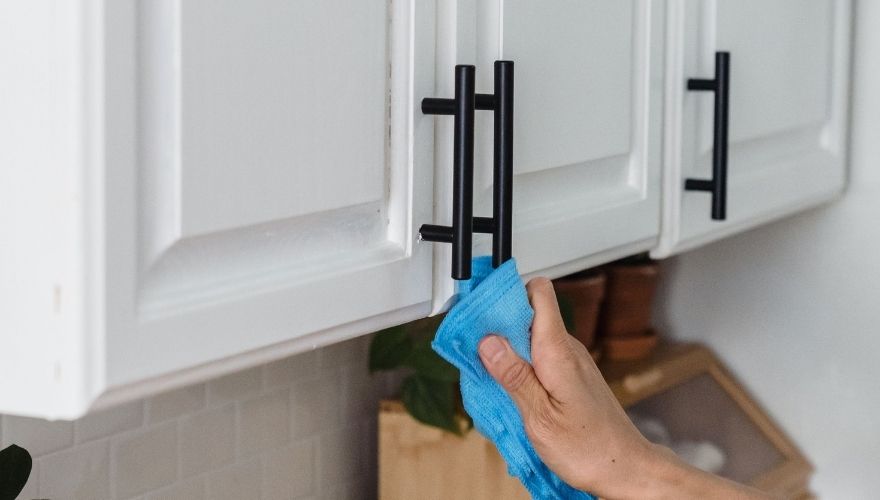
I used to skip this step often. I would remove the grease, walk away satisfied, and the next day the surface would feel slightly sticky again. Sometimes the reason is not new grease at all, but cleaner residue left on the cabinet doors.
So after cleaning, I take a fresh microfiber cloth. I dampen it with clean water, wring it out well, and wipe the entire treated surface.
I pay special attention to:
- the area around the handles
- the bottom edge of the upper cabinets
- the side of the cabinet next to the stove
- small trim details and corners on the doors
Those are exactly the places where grease builds up fastest in my kitchen.
Now I Do Not Wait Until the Cabinet Gets Sticky
After everything I read that evening, I changed one very small habit.
When I finish cooking something greasy, I look at the cabinets right next to the stove. If I see tiny droplets or feel a thin greasy layer under my fingers, I wipe it down right away. The job now takes me a minute or two, which is much less time than I used to spend on it!
And yes, I still watched an episode of the show that evening. Just a little later than I had planned.
Add a cabinet-safe warning section. Make the cleaning steps more scannable.