
I’m out sick this week. One of my kids is in college, the other is at school, so I’ve had an unusual amount of time to notice just how much can pile up around the house during a normal day. It made me wonder again how people with full-time jobs manage to get everything done. I at least work at home. Someone who spends the whole day at the office, plus the commute there and back, has even less time left.
As I thought about it, I looked at the latest BLS data on how employed people spend their time. On days when they work, Americans with full-time jobs spend an average of 8.65 hours on work and work-related activities. On the same day, they have an average of 1.10 hours for all household activities combined.
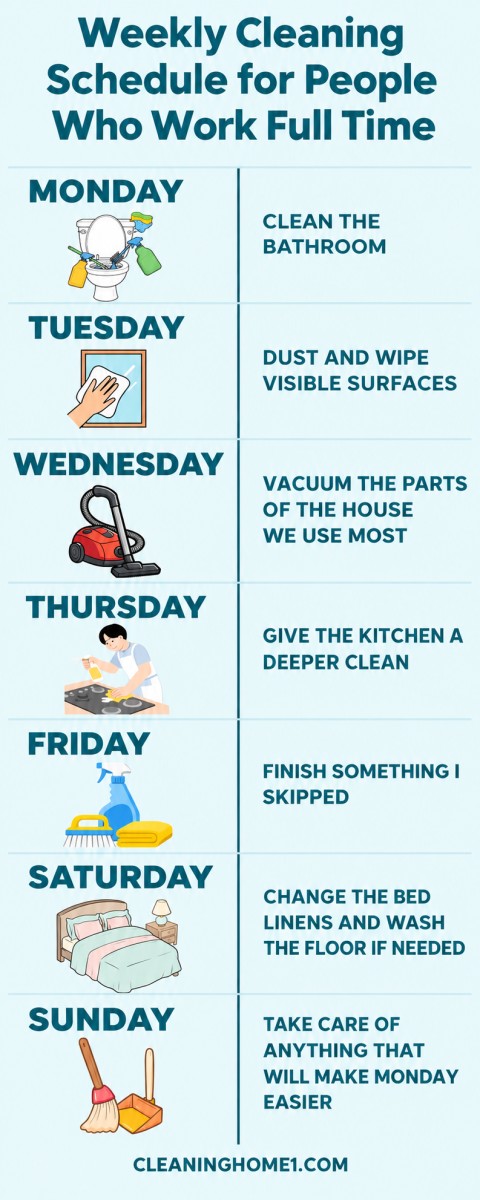
If you work full time, a good housework cleaning schedule can keep weekdays down to one main household task that takes about 15 to 20 minutes. Leave the bathroom for Monday, dust for Tuesday, vacuuming for Wednesday, and give the kitchen some extra attention on Thursday. Friday can cover anything you missed, and the weekend can be left for bed linens and anything that truly could not get done earlier.
The Housework Cleaning Schedule I Use During the Workweek
I’ve tried all kinds of schedules over the years, and the system that works best for me is the one where each day has one main purpose.
A few days ago, I read through the routine used by Clean Mama, my favorite website, again. I like that approach because it doesn’t try to squeeze the whole house into one evening. I don’t follow the chart blindly. If the bathroom looks perfectly fine on Monday, I’m not going to search for dirt just so I can cross something off a list.
The cleaning schedule works for me. I don’t work for the schedule.
Why Do I Like to Stick to the Cleaning Schedule I Set?
For years, after a long day, I would tell myself I’d deal with the kitchen in the morning. The problem was that the next day would start with a chore I had carried over from the night before. Instead of breakfast and a calm start, I had last night’s sink and countertops waiting for me.
That’s why a cleaning schedule matters so much to me now. When I know what needs to get done that day, I spend less time thinking about what else I could do. I finish what I planned and stop there.
I don’t try to clean everything every day. I just follow the cleaning schedule and deal with anything that would create more work for me tomorrow if I left it.
Here’s a little more detail about each day and how I handle it.
1. I Clean the Bathroom on Monday and Dust on Tuesday
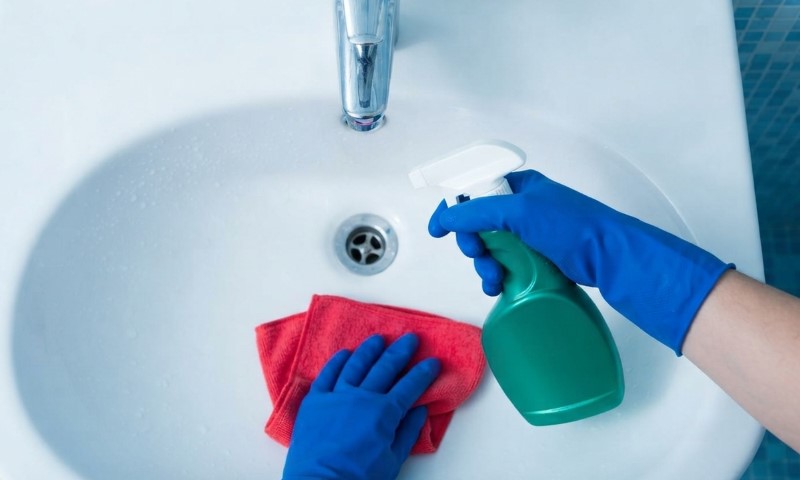
I chose Monday for the bathroom because I can tell pretty easily when the job is done. I clean the sink and toilet. I wipe the mirror if it has marks on it, and I clean the shower where I can see soap residue or mineral buildup.
I used to make a mistake right here. I’d start with the sink, notice a shelf inside the cabinet, then pull out every product. Half an hour later, I still hadn’t finished the job I went into the bathroom to do.
Tuesday is even simpler for me. I dust the places where I notice it during the week. My desk gets attention because I use it every day. I check the shelves in the living room because dust shows up there pretty fast.
I don’t take every book off the shelf once a week.
When I looked at the broader BLS table for full-time workers, I saw that they spend an average of 1.56 hours on all household activities across all days of the week. For employed women, the average is 1.76 hours. Other household tasks are included in the same category, which gives me even less reason to follow a plan that calls for hours of housework every day.
2. Wednesday Is for the Vacuum, and Thursday Is for the Kitchen
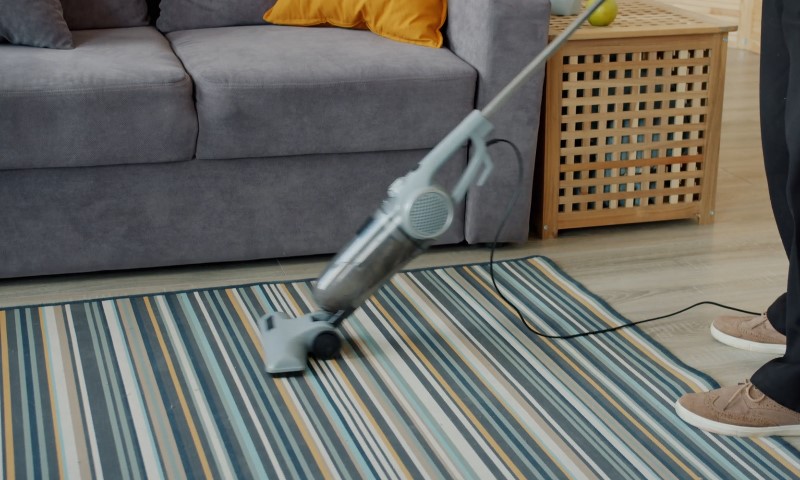
By Wednesday, I can already see where the most mess has built up during the week. In my house, it’s usually the areas everyone walks through, so those are the first places I vacuum.
I don’t move every piece of furniture. I don’t try to give the floors a full deep clean in the middle of the workweek. If I have more time, I will do another room. If I don’t, I finish the areas we use most and get on with my day. Also, opening windows daily clears stale air and lowers trapped pollutants, per the American Lung Association.
Thursday belongs to the kitchen in my house, and I have a special kitchen cleaning routine.
That’s when I do the jobs I don’t have time for during a normal evening tidy-up. I give the stovetop a more thorough clean. I check the refrigerator door and the fronts of other appliances, then wipe off any marks that showed up during the week.
3. I Keep Friday as a Backup Day, and I Don’t Turn the Weekend Into a Punishment

Friday is probably the reason my cleaning schedule survives a normal week.
If I didn’t get to the bathroom on Monday, I can do it on Friday. If I finished everything, I don’t go looking for extra work just because it’s Friday. After a few days like that, a cleaning schedule stops making much sense.
I found it interesting that I came across the same idea when I read the Clean Mama cleaning schedule for very busy people again. Friday is also the day for anything left over from the week, and every other day has one limited main task.
That leaves bed linens and floor care for Saturday in my house, but only if they actually need it. I don’t do a big clean on Sunday. I look at what could make Monday harder and take care of it in about ten minutes.
If I missed something unimportant, sometimes it simply waits until its next turn.
Mistakes I’ve Noticed in My Own Routine
The most common mistake I’ve made is to create a plan that looks great on paper but has very little to do with the life I actually live.
Once, I made a cleaning schedule where almost every day had a serious household chore. After a few days, I started to push tasks to the next day. By Saturday, I had the same long list I had tried to avoid in the first place.
I noticed the same problem when I read about the experiences of people with full-time jobs. In a Reddit discussion about a realistic cleaning schedule for an eight-to-five job, several people describe short daily chores as a way to keep weekends free. Others prefer to leave part of the work for one block of time on a day off.
A Good Housework Cleaning Schedule Should Leave Time for Life
After many years of taking care of a home, I stopped looking for a cleaning schedule that would keep every part of the house perfectly clean every day.
I don’t need that goal.
That’s why my housework cleaning schedule is pretty ordinary. If you’re just starting to make your own plan, begin with fewer chores than you think you can handle.
After a week or two, you’ll see where you need more time. It’s much easier to add one chore to a cleaning schedule that works than to start over every Monday because the last one was impossible.