
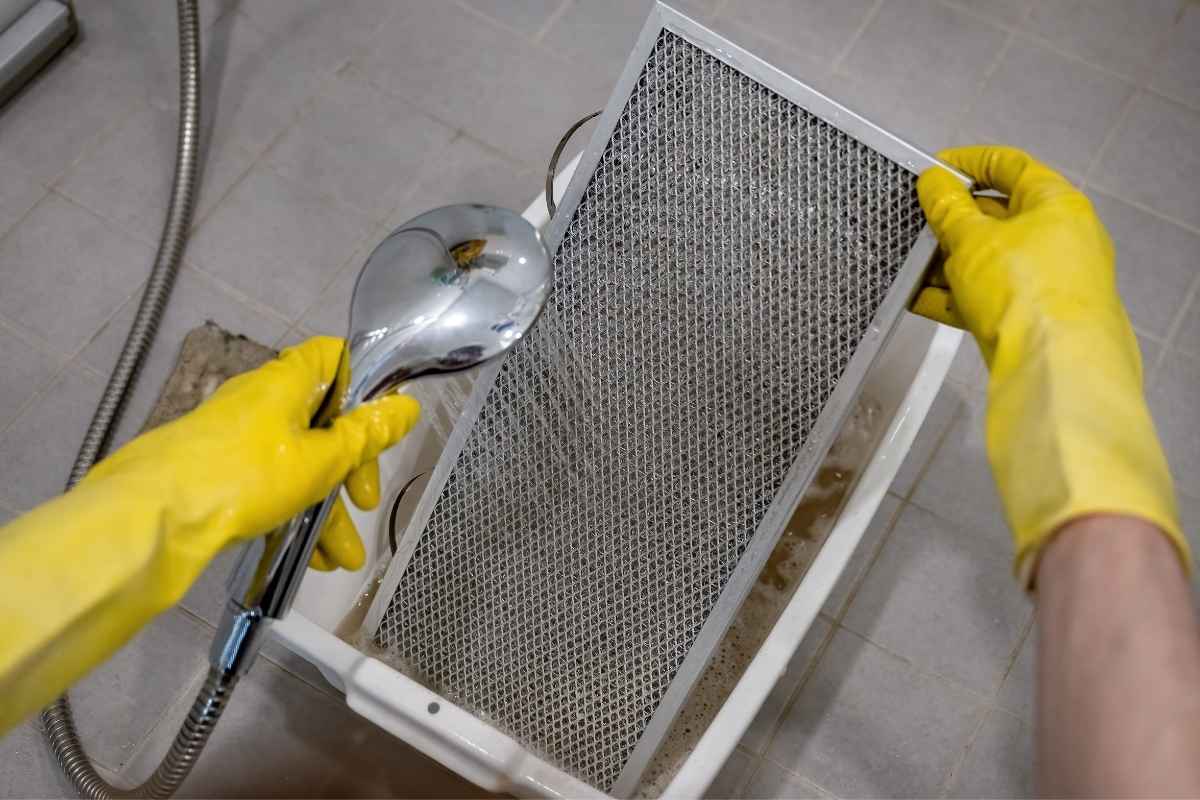
Fewer and fewer people cook every meal at home. Delivery is available almost everywhere, and a restaurant can sometimes feel like a much easier option after a long day. When we do cook, one problem bothers me in particular: the smell of food that lingers in the kitchen and then somehow ends up on the furniture and clothes.
The Hood Filter catches a large amount of the grease that passes through the hood, so regular cleaning matters if you want air and odors to leave the kitchen more easily. Grease can also settle on nearby surfaces, including kitchen cabinets, where a sticky film can be difficult to remove.
By chance, I was reading a very interesting Reddit discussion about cleaning greasy filters. People had tried dish soap, degreasers, the dishwasher, and all kinds of household methods. One piece of advice kept coming up in different forms: let hot water and dish soap do part of the work first.
That is exactly what I do at home.
My trick is to soak a greasy Hood Filter in very hot water with dish soap first, let the grease soften, and only then gently clean it with a brush.
How I Soak the Hood Filter Before Cleaning
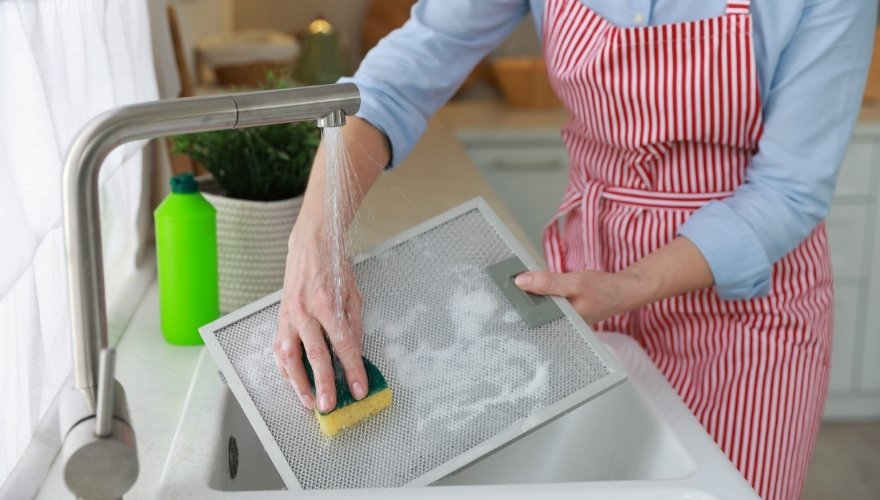
First, I turn off the range hood and remove the Hood Filter according to the instructions for my model. Most metal mesh filters have a small tab or clip that releases the filter.
Before you continue, check what type of filter you have. Metal mesh filters can usually be washed. Carbon or charcoal filters often need to be replaced because washing them is not possible.
For hand cleaning, I need:
- a sink or a container large enough to hold the filter
- cery hot water
- dish soap that cuts grease well
- a soft brush
- a few old cloths or paper towels
I plug the drain and fill the sink with enough hot water to submerge most of the filter, add dish soap, and mix it through the water a little with my hands.
Then I lay the filter inside. If the entire Hood Filter does not fit in the sink, I soak one half first, then after about ten minutes I turn it around and repeat the process with the other side.
The Spruce recommends soaking it for at least 15 minutes, with hot water, dish soap, and baking soda. I usually try hot water and a good dish soap first. If you wash the filter regularly, you often will not need anything else. After ten to fifteen minutes, the grease already starts to feel different under your fingers.
Then I take a brush and go over the mesh on both sides. I pay special attention to the corners and edges because that is where the thickest sticky layer always builds up on my filter.
If I still see a lot of old grease after the first pass, I change the water and soak it again. When I am done, I rinse the filter well with clean hot water and leave it to dry completely before putting it back into the range hood.
How Often Should You Wash the Hood Filter?
It mostly depends on how often you cook and what you make. If you fry food every day, use a lot of oil, or often cook at high heat, your Hood Filter will collect grease much faster. In a household where the stove is used only a few times a week, the filter may take much longer to reach the same point.
Here are the signs that are red flags for me:
- the metal mesh becomes sticky
- a yellow or brown layer of grease becomes visible
- food odors stay in the kitchen longer
- the range hood pulls steam less effectively
- grease starts to appear on parts of the hood around the filter
For practical cleaning tips, check out Cleaning Made Easy’s video on cleaning range hood filters, where they compare baking soda and vinegar with a chemical degreaser to see which method removes stubborn grease more effectively.
How Long Can a Hood Filter Last?
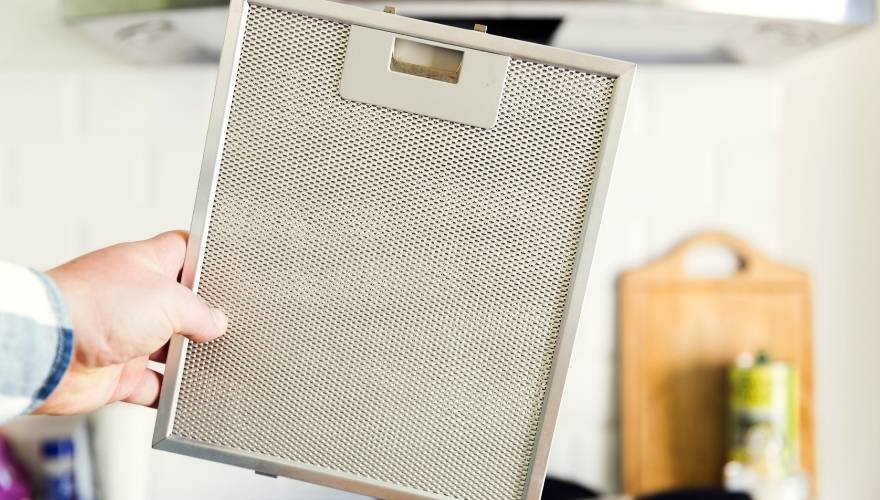
Here, the first thing that matters is knowing what type you have.
A metal mesh Hood Filter can last for years if it stays undamaged and you clean it regularly. That type of filter is not made for one-time use. If the mesh stays flat, there are no holes, the frame is not bent, and the filter looks clean again after washing, I see no reason to replace it just because of its age. Manufacturer recommendations can still be different.
That type of Hood Filter is found in certain recirculating range hoods and catches odors before the air returns to the room. Those filters are usually replaced instead of washed. Westinghouse recommends replacing its carbon models about every three to four months or after roughly 120 hours of cooking.
After This Trick, I No Longer Scrub the Hood Filter Dry
I used to remove the Hood Filter only after it had already become seriously greasy, then I would immediately grab a brush and try to scrub off everything that had built up. After a few minutes, my arm would hurt, the brush would be full of grease, and the sink would look worse than it did before I started.
Now I soak it first and let the water and dish soap do part of the work for me. I would much rather wait about fifteen minutes than spend the same amount of time standing over the sink with a brush.
The range hood already helps us enough every time we cook. I think we owe it at least enough to keep its filter from becoming a greasy slab that we remember to clean once a year.